
Intro to Norse Paganism

Introduction

Imagine walking into a room full of Norse pagans and asking: “How do I practice heathenry?”

Each gives you a different answer—“Read the Eddas,” “Make offerings to deities and ancestors,” “celebrate heathen holidays,” and so on.

But despite these suggestions, you still struggle to understand the meaning behind the religion itself.

What kind of relationship do the gods actually have with us?
What does their mythology and cosmology tell us about the world?
What is the “point” of practicing the religion at all?

This is the experience many people have when they first explore Norse paganism, myself included. Fortunately, it’s not the experience that needs to define your practice.

The goal of this article isn’t to tell you what to do to be Norse pagan. It’s to provide you with a roadmap of what Norse paganism is, what it means, and what you can explore. This way, you can develop your practice based on what you’re looking for, and develop your own intuitive understanding of it.

But first, let’s look at some of its basic features:

What it is

Norse paganism is a spirituality based in the cosmology of Norse mythology and Scandinavian folklore. It’s characterized by the veneration of the Aesir, the Vanir, jötnar, land-spirits, house-spirits, ancestors, and other supernatural figures.

Its Names

Norse paganism has a number of names, including:

  • Heathenry/Heathenism
  • Norse heathenry
  • Norse polytheism
  • Nordic animism
  • Nordic religion
  • Forn sed (“old ways”)
  • ásatrú / asatro (“true to the Aesir”)
  • hedendom (“paganism”)

All these terms refer to the same thing. However, their connotations can change depending on the context they’re used in. Practitioners might refer to themselves as heathens, Norse pagans, Norse polytheists, or Ásatrúar.

Note that “heathenry” can also refer to other forms of Northern European paganism, such as Anglo-Saxon heathenry, Slavic heathenry, Teutonic heathenry, Baltic heathenry, and others.

I tend to use “heathenry” as a synonym for “norse paganism,” which you’ll notice throughout this article.

Its Origins

Norse paganism has its origins in Scandinavia. It grew from the practices, beliefs, customs, and worldviews of the Norse, who are the pre-Christian ancestors of modern-day Scandinavians.

What we know about their religion comes from texts written after Scandinavia converted to Christianity. Chief amongst these texts are the Prose Edda and the Poetic Edda. Though Christianized, they provide the most complete record of the Norse myths we have today, and are frequently used as reading material.

The Composition of Norse Paganism
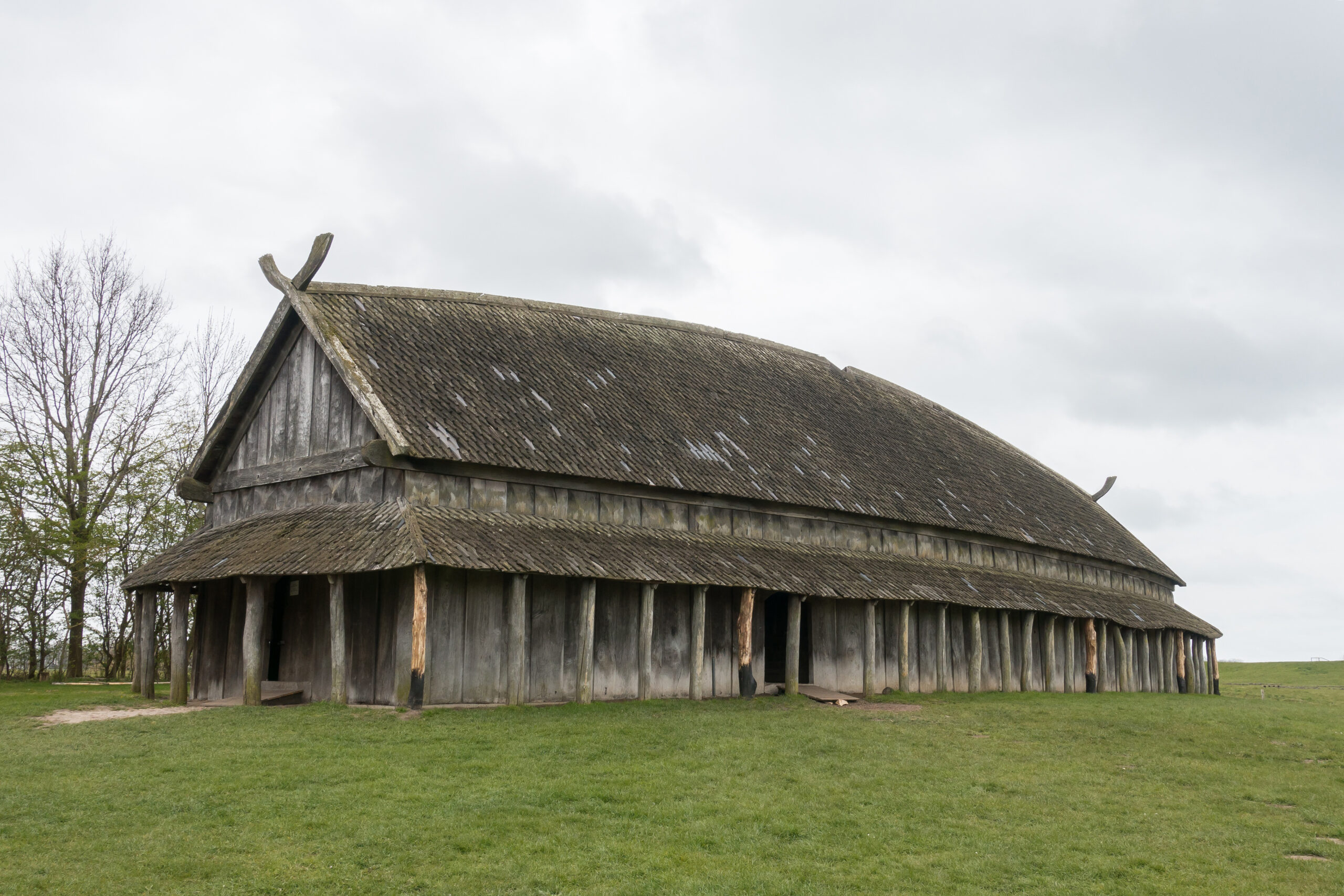
Now that we’ve covered some general background, let’s dive into the actual structures of Norse paganism.

This religion is, first of all, very different from the religions you’re probably used to.

It has no doctrines, creeds, or dogmas.
It has no holy books or sacred texts.
It has no prophet or great spiritual teacher.
It has no central authority presiding over it.
It recognizes no supreme being.
It also has no core ideology driving it.

Instead, Norse paganism is…

Norse paganism is decentralized, meaning it varies between individuals, groups, locations, and time-periods. At no point did it ever have a unified doctrine or “way of doing things.” The polytheism of the Norse grew organically out of Scandinavian culture, varying across place and time. The way heathenry was practiced in 500 BCE Norway was different from the way it was practiced in 100 CE Sweden, and so on. Modern Norse paganism likewise varies from person to person, group to group, and region to region. Its nature as a decentralized religion is why so many heathens say there’s no “one true way” to practice it.

Norse paganism is animistic. Animism is the view that we live in a world populated by people, whether those people are spirits, plants, animals, geographical features, humans, or something else. Animism is not a “belief” we adopt, but a way of thinking we cultivate in ourselves.

Norse paganism is pluralistic. It holds that the universe contains multitudes, is built on numerous principles, and contain different, multiple, or even shifting truths. This stands in contrast with dualism (two principles, such as “good vs. evil”) and monism (one principle, such as the idea that all things emanate from one thing).

Polytheism is the belief in multiple gods. All forms of heathenry are polytheistic, including Norse paganism. Some deities are well-known while others are more obscure, and some were worshiped greatly in some regions and less in others. The decision to venerate deities at all, and which ones, is up to you.

Norse paganism focuses on improving the quality of our world and our currently-lived lives, rather than transcending this world for the purpose of refining the soul or achieving a desirable afterlife. While some transcendent philosophies exist in heathenry, we aren’t required to follow them. A good afterlife is already guaranteed with our ancestors.

Norse paganism is orthopraxic, meaning it places its emphasis on actions and outcomes. This is different from orthodoxic religions, which place an emphasis on faith, belief, and scriptural adherence. Norse pagan orthopraxy is not based in scripture, but rather based in developing right relations with the world around us. It’s why we venerate deities and spirits and give them offerings.

Cosmology

Cosmology represents the way a culture understands the universe. It also provides the filter we use to interpret reality and understand it. By understanding Norse cosmology, we can understand the practice of Norse paganism a lot more.

Cosmological Beings

The gods and spirits of Norse cosmology represent different processes of the world. This includes things like weather patterns and avalanches, but also things like our emotional states and mental faculties. They’re sorted into different families, or “tribes,” based on their proximity to humanity:

The Aesir (singular: Ás) are the principal family of gods. They directly characterize humanity, representing the concepts of people, society, family-members, human development, and the structures of civilization. Many of them also represent certain faculties of thinking and feeling. They live in a settlement called Asgard.

The Vanir (singular: Van) represent natural occurrences that benefit humankind, such as fertility, growth, gentle rains, mild temperatures, and calm seas with good winds. While the Vanir support human civilization, they aren’t necessarily “of” human civilization themselves. They live in a realm called Vanaheim.

Jötnar (singular: jötun or jötunn) roughly translates to “giants.” They’re not so much “large humanoids” as they are primal forces. They represent the untameable wilderness, dwelling in environments we can’t inhabit, like the peaks of mountains, the bowels of volcanoes, and in the depths of oceans. Their abode is called Jötunheim. Some of the Aesir are jötun or part-jötun.

Other spirits in Norse cosmology include dwarves, elves, valkyries, and norns. They characterize additional processes of the world. Certain spirits from Scandinavian folklore, such as nisse, landvættir, and trolls, also play important roles within heathen practices, representing local or domestic features and phenomena.

Deities

Deities relate to us as advisors, mentors, and friends. Like our grandparents, they’re older and wiser than we are, but like our grandparents, they watch over us and teach us valuable things. They’re not our lords, and we aren’t their servants. Rather, they’re our family.

Some of the more popular gods are…

  • Balder

    Baldr

  • Bragi

    Bragi

  • Eir

    Eir

  • Fenrir

    Fenrir

  • Frey

    Freyr

  • Freya

    Freyja

  • Frigg

    Frigg

  • Gefjun

    Gefjon

  • Heimdall

    Heimdallr

  • Hel

    Hel

  • Idunn

    Iðunn

  • Jormungandr

    Jörmungandr

  • Loki

    Loki

  • Njord

    Njörðr

  • Odin

    Óðinn

  • Sif

    Sif

  • Skadi

    Skaði

  • Thor

    Þórr

  • Tyr

    Týr

  • Ull

    Ullr

Cosmological Structures

If gods and spirits represent natural phenomena, then the structures of Norse cosmology represent the container which contextualizes those phenomena. That sounds kind of trippy, so here are some examples:

Yggdrasil (“Odin’s gallows”) is the World Tree that sits at the center of all reality. It’s depicted as a giant ash that holds all worlds within is boughs, with its roots in various wellsprings. Though not obvious at first glance, Yggdrasil is a diagram of how we perceive reality and all the different perspectives (or “worlds”) we experience it from.

The worlds are places where different beings dwell in. Our physical, material world is known as Midgard (“Middle Earth”). The world of the gods is known as Asgard (“the farm of the gods”), while giants live in Jötunheim (“giant-country”). Though the worlds are romantically depicted as numbering nine in total, there are many different worlds. At certain times and under certain circumstances, we visit these worlds.

The halls are microcosms of worlds. They’re the places where the gods live. They also represent specific dimensions of the human experience. Perhaps the most famous hall of all is Odin’s hall, Valhalla. This is the literal battlefield.

There are plenty of other structures mentioned in Norse cosmology that carry a great deal of significance, such as Mimir’s Well and bífrost. These also have their own specific meanings and experiences attached to them, which you can learn by visiting the Terms Defined page.

Cosmological Events

The Norse myths were originally passed down through oral tradition. Their purpose is to illustrate the inner turmoil that leads to outer chaos and war between people. The myths teach us the warning signs so we know how to prevent it.

The Norse creation story describes how the first gods and jötnar came into existence. In this story, Odin and his brothers slay the primordial giant, Ymir, and create Midgard out of his body. The ocean sweeps Ymir’s offspring out to the furthest edges of the world, where they now live in Jötunheim.
Preserved in the Poetic Edda and cited in the Prose Edda, Völuspá is a prophecy given to Odin by an unnamed seeress, who foresees the Aesir’s demise in a terrible battle where all the forces of the world fight against them. Not only is Odin negligent about preventing this fate, but he and the Aesir carelessly help bring it about.

One day, Loki comes home with three children he has with his consort Angrboða (“sorrow”). The first is Hel, who represents grief, the second is Jormungandr, who represents dread, and the third is Fenrir, who represents our mammalian instincts and behaviors. Terrified, Odin banishes Loki’s children out of sight. They eventually grow to incredible sizes and burst from their confinements, overpowering Odin and the Aesir during Ragnarök. This is an allegory for what happens when we suppress the parts of us we don’t like.

Many stories about the gods relate to Ragnarök indirectly. Instead, they focus on illustrating who the gods are, what they do in the world, and how they got certain treasures, like Thor’s hammer. Some stories are simply entertainment, while others are designed to give courage or perspective to listeners (particularly young ones). Nevertheless, things often happen in these stories which point to the brewing of Ragnarök, such as the Aesir repeatedly threatening Loki’s life until he becomes jaded and malicious.

Perhaps the most interesting myth is the story of Baldr’s death. Baldr personifies peace, both in terms of inner-peace and peace in the world. However, he’s killed at the hands of Hoðr, who personifies war. Hoðr only does this because he’s encouraged and enabled by a jealous and vindictive Loki, who represents our motivation. It’s the story of how our own feelings of resentment can destroy the peace within us and around us.

Despite how it’s portrayed by Snorri Sturluson, Ragnarök is not the Norse version of the Christian end-times. It’s the destiny the gods bring upon themselves through the way the treat themselves and other people. Ragnarök represents a cycle of self-destructive behavior: It’s something that has already happened, is happening, and will happen. The myths teach us how to break the cycle.

Note

Don’t worry if all of this is very new. Norse cosmology is something you gradually understand as you go about your day-to-day life.

Metaphysics

Boat-shaped burial mound in Gotland, Sweden.

Metaphysics examines things about the universe we can’t verify in a laboratory setting, such as the nature of the soul and how the afterlife works.

Fate is a surprisingly complex topic in Norse paganism. Our destinies are said to be governed by nornir, women who determine the quality of someone’s life. Like most spirits, the nornir personify specific worldly forces—they’re the unconscious behaviors we have that influences the outcomes of our lives. Normally, we’re at the mercy of these behaviors, but if we understand how to guide them ourselves, we can take control of our fate.
Wyrd and orlog are both concepts tied to the Norse concept of fate. The wyrd (urðr, meaning “fate”) represents the web of reality that’s woven from actions and outcomes. The orlog (ørlög, meaning “ancient law”) represents the fixed and unchangeable rules that wyrd flows through. Different things have different rules governing their behavior, and therefore have different orlog.
In Norse paganism, the soul is not just one part, but an ecosystem comprised of multiple parts. The number of these parts seems to vary from four to several depending on the source, but they often include the hugr, the hamr, the hamingja, and the fylgja.

The heathen concept of death is famously misinterpreted. Many people think the “point” of being heathen is to die in battle and go to Valhalla. But the idea of Valhalla being a warrior’s paradise is a new portrayal, invented long after Scandinavia converted to Christianity. Prior to this, valhöl was just a poetic way of saying “the battlefield.”

From what we can tell through historical burials, the Norse seemed to believe their afterlives were determined by where they died. Unless they died far from home, they would go to their ancestors by virtue of being buried with them. Today, heathens carry many different views about death, but our religion has no concept of damnation.

Like most religions, Norse paganism is focused on creating people of good character.

However, it doesn’t do this using morals.

Why?
Because morals don’t actually drive our behaviors.
Experiences do.

Norse paganism guides human development through experiences. It does this through rituals, holidays, and rites but also through singing and storytelling.

Stories are how we simulate experiences without going through them directly. We don’t need to analyze the contents of the Norse myths, but to feel what it’s like to go through the events they describe. The binding of Fenrir, Thor threatening Loki, the Aesir stealing from the giants, and Ragnarök all feel bad for a reason—those feelings teach us the values.

Different religions think about law in different ways. Some religions recognize a divine law while others do not.

We heathens think of law as a tool made by and for humanity. The purpose of law is to give ourselves a shared standard for how to cooperate with one another. Our laws change when our definition of “what’s cooperative” changes.

Many members of the Aesir are associated with law because of how central law is to society. However, they are not the lawmakers of humanity because, again, they’re not our lords and we aren’t their servants.

Practice

Norse paganism is rooted in the idea that we can form relationships with the world around us and the forces within it. This forms the core of any heathen practice.

The myths are the lifeblood of our cosmology, so gaining familiarity with them is the top priority for most heathens. However, the myths are designed to be heard, not read, and ideally told at a young age before we learn to think about the world too logically. Unfortunately, we don’t always have access to these conditions. Fortunately, there are ways around this.

Norse paganism recognizes deity-veneration, spirit-veneration, and ancestor-veneration. It’s very rare for heathens to venerate every deity, every spirit, and every ancestor they know of. Instead, we typical focus on the ones we’ve formed interpersonal relationships with. We’ll build altars or shrines and give offerings as part of our veneration practices.

Blót is a word meaning “offering.” This is the act of giving offers to deities, spirits, or ancestors. You’ll see this word used often in heathenry to refer to any act of giving food, libations, and gifts, whether casually or in a more elaborate ritual setting. Blót is also used to describe a heathen service.

Sumbel is a feast with three rounds of toasting. It involves passing a communal drinking horn around in a circle. Typically, the first round is a toast to the gods, the second is a toast to the ancestors, and the third is a toast to the living. However, the format can change depending on the occasion.

Northern European practices have a wealth of magical traditions. While magic isn’t taboo in Norse paganism like it might be in other religions, it’s always been something mysterious—we’re playing with the design of reality in ways most people can’t see. Some magical traditions require direct initiation for this reason, and can’t be learned independently. Magical practices are optional.

The Norse had a written alphabet known as the futhark, which we call the runes. Runic divination appeared in the 1970’s and has since become a very popular form of fortune-telling. Some heathens use runic divination as part of their practice.

In ancient Scandinavia, holidays varied from place to place, and we don’t know for sure what they all were. To our best knowledge, the Norse followed a lunar calendar based around the moon phases, solstices, and equinoxes, which helped them mark the passage of time. Some heathens follow this lunar calendar and celebrate holidays that correspond with it, while others follow neo-pagan calendars such as the Wheel of the Year.

Heathen practices are characterized by direct involvement with deities, spirits, and ancestors. The idea of directly communicating with deities or spirits can be new for a lot of people, which is why I’ve put together an article to help you get started.

Clergy are trained professionals who provide spiritual care to a spiritual community. They lead rituals, perform marriages and funerals, and offer guidance when someone’s having a spiritual crisis. Being clergy is like being a spiritual therapist or a social worker—it’s defined by public servitude and caring for people’s wellbeing.

In Norse paganism, clergy are typically called goðar (goði for men, gyðja for women) which means “chief.” However, some circles use the term ellri (“elder”) to convey that this is not a role of rulership.

You don’t have to be full-fledged clergy to perform a public blót, lead a heathen gathering, or conduct a heathen marriage.

Since Norse paganism is decentralized, it’s common for smaller groups to develop their own unique traditions and philosophies based on a certain theme or shared experience. These are known as mystery traditions. Examples of historical mystery traditions include the practices of the völva (seeresses) and the practices of the berserkir (the “bear-shirts,” or warriors of battle-frenzy). Many mystery traditions remain unknown because, as the name implies, they’re kept secret from the public.

Norse Paganism at Large

Now that you’re familiar with the practice of Norse paganism, let’s look at some of the societal influences that have shaped it.

The Prose Edda gives us a distorted impression of the Norse myths by interpreting them through a Christian lens. You’re not going to be someone who’s oblivious to that. Unfortunately, many heathens are. Some go on to even recreate Christian dynamics in heathenry because of it.

The trick to understanding Norse paganism is to remove the idea that Christianity represents “the default” for how to do religion. By getting rid of unwanted Christian thinking, you’ll be able to separate “what is Christian” from “what is Norse” easily.

On top of Christian influences, the Prose Edda further muddies the Norse myths by adding in features of Greek and Roman polytheism. For example, Snorri portrays the Aesir like the twelve olympians, Helheim like Hades, and the nornir like the Fates. Keep an eye out for these Greco-Roman influences.

As you explore heathenry, you’ll meet people who’ll warn you against something called folkish heathenry, and for a good reason: Folkish heathenry is a white nationalist movement. It shares the same origins as Nazism, growing out of the Germanic völkisch movement.

Some things, such as the Nine Noble Virtues, are the invention of Folkish heathenry.

You’d be surprised how much of our impression of Norse paganism is the work of popular culture:

  • Tolkien’s works gave us our modern-day depictions of elves and dwarves.
  • Wagner’s Der Ring des Nibelungen gave us the image of vikings in horned helmets.
  • Skyrim, Vikings, and viking folk-metal popularized the dark, tribal aesthetics associated with heathenry.
  • Marvel introduced the world to Thor, Loki, and other deities through anachronistic, superhero versions of them.

Before you go and buy yourself a bearskin rug, just remember that aesthetics are just a way of dressing something up. You can perform sumbel with a plastic cup, and it would be just as “heathen” as performing it with a drinking horn. Separating the commercial depictions of heathenry from its practices is part of developing a heathen practice.

The heathenry we practice today is not the same as the heathenry of pre-Christian Scandinavia. Norse pagans tend to take two approaches to Norse paganism in light of this: Reconstructionism and Revivalism.

Conclusion

Mjölnir pendants, symbols of Thor, are commonly worn by those who practice Norse paganism.

In pre-Christian Scandinavia, there was a very popular trend of wearing pendants shaped like Thor’s hammer. Thor is the defender of humanity, and wearing his hammer evokes his blessing and protection.

Many of us Norse pagans wear mjölnir pendants to showcase our spirituality. I’ve seen more styles appear on the market than ever before—there are large ones and small ones, elaborate ones and minimalist ones. Some are made out of gold or silver, and others are made out of wood, amber, or gemstones. You can even find reproductions of historical pendants, or completely modern designs!

While mjölnir remains the most popular choice, some heathens choose to wear other pendants symbolizing other gods, while others choose to wear no devotional jewelry at all. Just remember—this is is your religion, and you’re the one who makes it for you. Have fun!

FAQ

Are jötnar evil?

No. Giants represent forces of nature we can’t control. To say they’re evil is a bit like saying tigers are evil. They’re wild, untameable, scary, and dangerous if provoked, but that’s only because their natures are different from ours.

Are the Prose Edda and the Poetic Edda sacred texts?

No. What they are is culturally-significant texts. They show us a snapshot of history that proves the Norse myths are as old as we think they are. Some heathens might use the Hávamál as a guide for behavior, but not all do.

Can I worship the Norse gods and gods from another pantheon at the same time?

You may! This is very common today.

Do I need to worship Odin to be heathen?

No. Odin is the Allfather, so his role is to be everyone’s grandpa. We don’t need to form a close bond with our grandpa just to form close bonds with our cousins, aunts, and uncles. Like any decision you make in heathenry, worshiping Odin is optional.

Does Norse paganism have a concept of redemption?

No. Norse paganism has no concept of redemption because it has no concept of sin. We don’t need to redeem ourselves when we’re not in trouble to begin with.

Is heathenry a viking religion?

Sort of. Some of the vikings were heathens, but heathenry is not the religion of being a viking. Many vikings were also Christians, so their behaviors probably had very little to do with their religious beliefs.

Is Loki evil?

No. Snorri describes Loki as “evil” because it was normal for medieval scholars to interpret paganism through the lens of Christian cosmology. This is also why Snorri portrays Valhalla like heaven, Ragnarök like the end-times, jötnar like demons, and so on.

Snorri’s Lucifer-like description of Loki is his own invention. However, some pagans believe it’s true because a devil-figure feels familiar to them. This is one of the reasons why I don’t recommend using the Eddas as your first exposure to the myths, especially if you’re coming from a Christian background.

Is Norse paganism a closed religion?

No. Norse paganism is open to anyone who wishes to practice it.

What’s the difference between the Prose Edda and the Poetic Edda?

The Prose Edda is a textbook on skaldic poetry written by Snorri Sturluson, whereas the Poetic Edda is a collection of anonymous poems copied by an unknown scribe. They’re often paired together because Snorri cites the Poetic Edda throughout his Prose Edda.

Who can practice Norse paganism / ásatrú / heathenry?

Anyone can. There are no special requirements for being heathen.

References

    • The Poetic Edda. Trans. by Carolyne Larrington, Oxford University Press, 2014.
    • Nordvig, Mathias. Ásatrú for Beginners: A Modern Heathen’s Guide to the Ancient Northern Way. Rockridge Press, 2020.
    • Orchard, Andy. Dictionary of Norse Myth & Legend. Weidenfeld & Nicolson, 2022.
    • Schön, Ebbe. Asa-Tors Hammare: Gudar Och Jättar i Tro Och Tradition. Hjalmarson & Högberg Bokförlag, 2004.
    • Simek, Rudolf. Dictionary of Northern Mythology. Trans. by Angela Hall, D. S. Brewer, 2007.
    • Snook, Jennifer. American Heathens: The Politics of Identity in a Pagan Religious Movement. Temple University Press, 2015.
    • Strmiska, Michael F. “‘Pagan Politics in the 21st Century: “Peace and Love” or “Blood and Soil”?’” Pomegranate: The International Journal of Pagan Studies, vol. 20, no. 1, 23 Jan. 2018, pp. 5–44, doi:10.1558/pome.35632.
    • Sturluson, Snorri. Edda. Trans. by Anthony Faulkes, Orion Publishing Group, 1995.
Published On: August 17th, 2025Last Updated: October 4th, 2026

Recent Posts

    • The Worlds of Norse Cosmology
    • How to Build an Altar
    • Intro to Norse Paganism
    • Deity & Spirit Work 101

Recent Articles

    • Frith
    • Mjölnir
    • Prose Edda
    • Animism
    • Jormungandr
    • Útiseta
    • Blót
    • Shrine
    • Altar
    • Norse Mythology

Books

My books are now available in US stores and in online retail stores worldwide.

Go to Top